
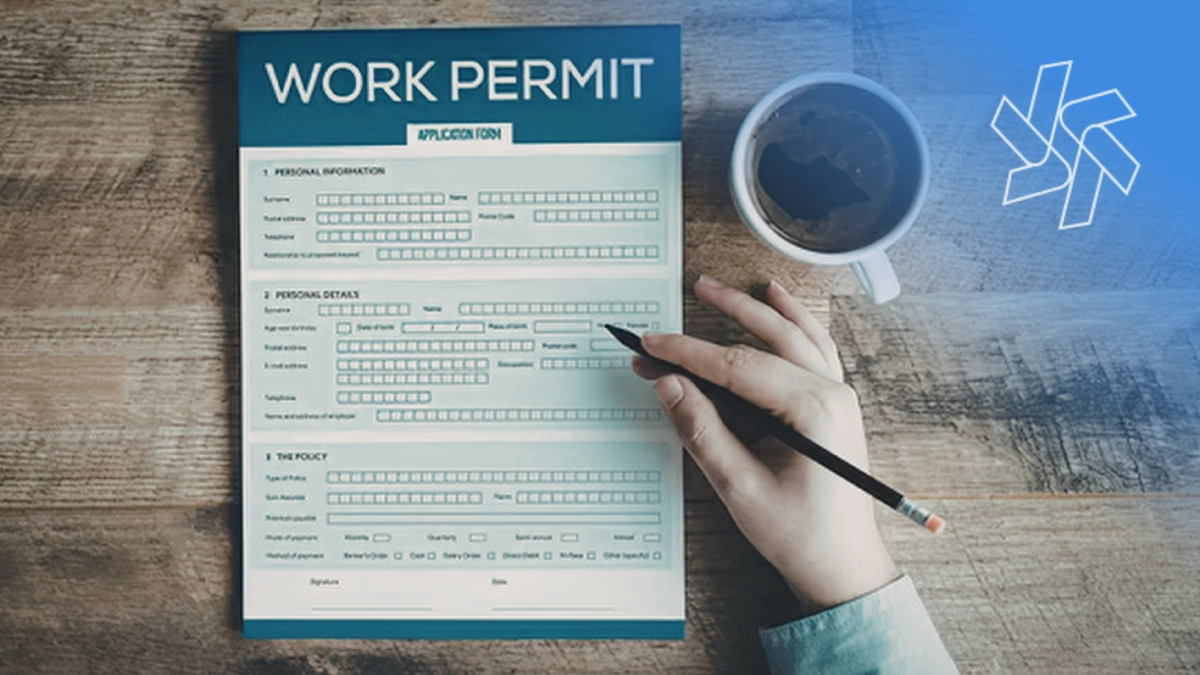
For years, Georgia has been regarded as one of the most accessible and business-friendly destinations for foreign employees, remote professionals, entrepreneurs and international companies. However, recent fundamental changes to labour migration legislation have significantly reshaped the requirements for obtaining a work permit in Georgia and securing the right to work and reside in the country.
The new immigration framework has been introduced in stages: the core reforms took effect on 1 March 2026, with further refinements introduced by the legislative amendments of 15 April and 9 July.
Whether you are a foreign national employed by a local company, a remote professional or freelancer, an individual entrepreneur or an HR manager, a thorough understanding of these regulations is critical to avoiding the risk of breaching immigration and labour law.
What Does the New Work Authorisation System Involve, and What Changed in 2026?
Under the amended legislation, the former simplified system has been replaced by a strict authorisation process. Whereas a standard residence permit or visa was previously often sufficient for economic activity in Georgia, today every foreign national engaged in employment, entrepreneurial or management activity requires an official right to work.
The principal aims of the 2026 amendments are to manage legal labour migration effectively, protect the local labour market and prevent illegal employment.
Need assistance with your work permit in Georgia? Our legal team provides expert guidance on work authorisation, residence permits and labour migration compliance.
Key Aspects of Georgia’s New Immigration Legislation
1. WhoImmigrant Is Covered by the New Rules, and Who Qualifies as a “Labour ”?
Under the new legislation, a labour immigrant is any foreign national without a permanent residence permit in Georgia who intends to:
- be employed by a company registered in Georgia (working on-site);
- work remotely while physically present in Georgia;
- be self-employed (including freelancers, individual entrepreneurs, and foreign directors and partners of Georgian companies).
Important legal nuance regarding directors and partners:
Under the Law of Georgia on Labour Migration and the established practice of the Ministry of Labour, the status of “self-employed foreign national” and the related rules (including the obligation to register in the labour migration database) also apply to foreign members of a company’s management bodies, namely directors and partners.
2. Transitional Periods and Deadlines
The amendments provide for different transitional periods for different categories of persons:
- Employees already registered on the portal: Persons who held an active registration on the labour migration portal before 1 March 2026 have until 1 January 2027 to meet the new statutory requirements.
- Self-employed persons, freelancers, directors and partners: A separate portal (self-employment portal) has been created for this category, with a transitional period until 1 May 2026 to register and obtain the right to work.
3. Procedures and Requirements
The process of obtaining the right to work begins with an application to the State Employment Support Agency:
Foreign nationals employed by a local company: The application is submitted by the employing company via the labour migration portal. (Following the July 2026 amendments, the requirement to first advertise the vacancy on Worknet has been abolished, and the process is now carried out directly through the portal.)
Self-employed persons / directors / partners: Applicants upload their application themselves on the self-employment.moh.gov.ge portal and then attend a mandatory video interview with an Agency representative to confirm the scope of their activity and their competence. The right is granted for a period of 6 to 12 months (not exceeding one year) and may be extended no later than 30 days before expiry.
Fees and processing times:
- Standard procedure: GEL 200 (processing time: 30 calendar days).
- Expedited procedure: GEL 400 (processing time: 10 working days).
4. Visa, Residence Permit and Synchronisation of Deadlines
Obtaining the right to work is a mandatory prerequisite for securing final legal status:
If the foreign national is in Georgia: Within 10 days of obtaining the right to work, they must apply to the Public Service Hall (the Public Service Development Agency) for a work residence permit.
If the foreign national is abroad: Within 30 days of obtaining the right to work, they must apply to a Georgian diplomatic mission (embassy or consulate) for a D1 category immigration visa.
Important practical change regarding the D1 immigration visa:
The previous practice of submitting D1 visa applications from within Georgia has changed. D1 visa applications are now accepted only at Georgian diplomatic missions abroad (the application is completed through the Georgian Consular E-Application System, after which the original documents must be submitted in person to the relevant Georgian consulate.).
Critical Restriction: The Third-Country Visa Rule
One of the most common legal obstacles relates to where the application is filed:
Restriction on in-country applications: If a foreign national is staying in Georgia on the basis of a third-country visa or residence card (rather than under the visa-free regime applicable to their country of citizenship), they cannot apply for a residence permit from within Georgia.
In such cases, the person must first obtain a D1 immigration visa abroad, enter Georgia, and only then apply for a residence permit.
Please note: where this rule is breached, the administrative authority will leave the application without consideration.
5. Liability and Penalties
Breach of the new rules gives rise to administrative liability:
- Employing a foreign national without completing the prescribed procedures results in a fine of GEL 2,000, imposed separately on both the employing company and the foreign employee.
- If the Agency refuses to grant the right or terminates the proceedings due to deficiencies in the documentation, resubmission of the application is barred for one month.
6. Legal Services and Support
Navigating immigration procedures correctly, meeting strict deadlines and accounting for legislative nuances requires professional legal support. Our qualified immigration lawyers offer comprehensive legal assistance:
For employers and HR managers:
- corporate compliance audits against the 2026 labour migration legislation;
- preparation of documentation and management of applications on the labourmigration portal;
- representation before state authorities.
For foreign specialists and entrepreneurs:
- advice on lawful employment and obtaining a residence permit in Georgia;
- full management of D1 visa and work residence permit processes;
- preparation for the video interview and prevention of legal risks.
Conclusion
Georgia’s new immigration and labour regulations aim to create a transparent and stable business environment. Managing these processes correctly and on time ensures that your activities in Georgia proceed without delays or financial penalties.
Obtain professional legal support and ensure your activities are fully compliant with Georgia’s 2026 immigration standards. Contact us for a consultation.